

You want to practice your hockey shot year-round, but winter ice time is limited and expensive. Practicing outdoors works during decent weather, but cold, rain, or darkness often make outdoor shooting impractical. The obvious solution seems to be shooting pucks in your garage or basement, but concerns about broken windows, dented walls, noise complaints from family or neighbors, and floor damage make indoor shooting seem impossible without costly home repairs.
The reality is that indoor hockey shooting practice is entirely possible without destroying your home when you use proper equipment and take sensible precautions. Thousands of players from youth to adult levels practice shooting indoors successfully, developing their skills in the convenience of home without the damage concerns that make many parents forbid the practice entirely.
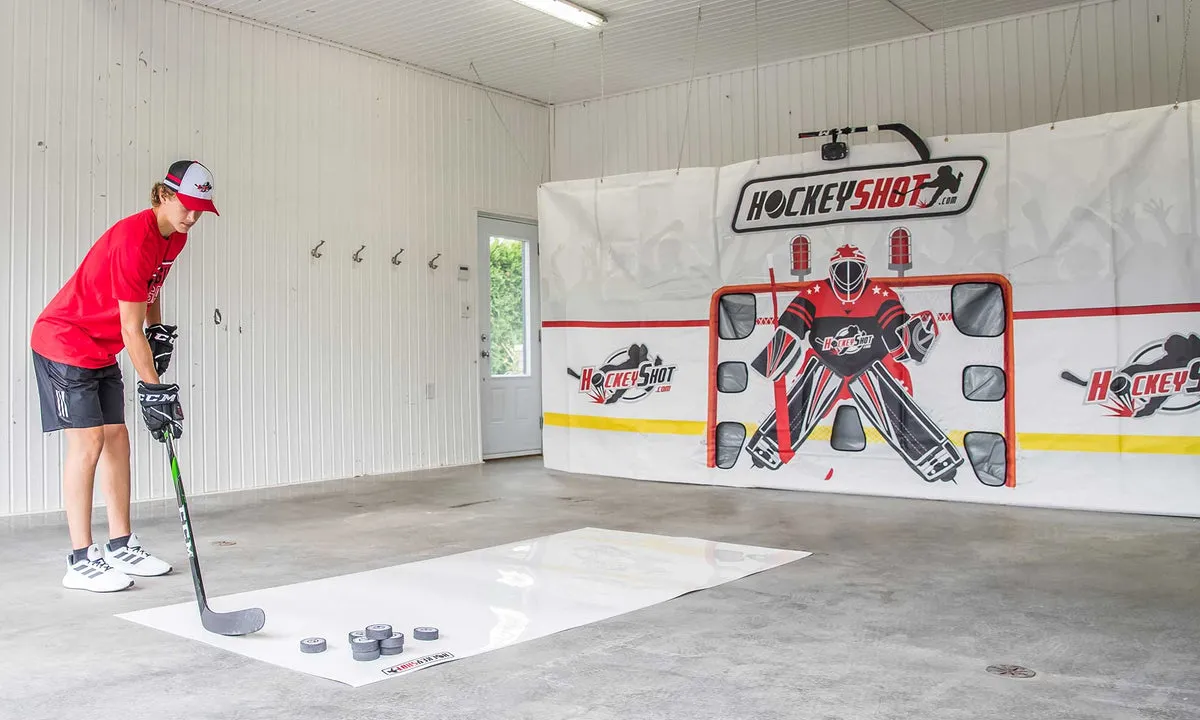
Understanding what equipment protects your home, how to set up safe practice spaces, and which shooting techniques work indoors allows you to practice effectively while keeping your home intact. Equipment like a quality hockey shooting tarp provides essential backstop protection that contains pucks and prevents the wall damage that makes indoor shooting risky without proper gear.
The Right Space Makes All the Difference
Not all indoor spaces suit hockey shooting equally. Choosing an appropriate location within your home significantly affects safety, noise levels, and damage risk.
Garage Advantages
Garages offer several benefits for hockey shooting, including hard floors suitable for pucks or balls, typically more space than basements, windows that are often limited or easily protected, and tolerance for noise that would disturb people in living areas.
Single-car garages provide minimal functional space while two-car garages offer comfortable practice areas. Clear the area of vehicles, bikes, and stored items before shooting to prevent accidental damage.
Basement Considerations
Finished or unfinished basements can work if the ceiling height permits a full shooting motion. Standard 8-foot ceilings are marginal for adults using full-size sticks but adequate for youth players or shooting drills that don’t require a full windup.
Basement floors often require protection since concrete can be slippery, and wood or tile floors might be damaged by pucks. Shooting mats or synthetic ice tiles provide appropriate surfaces.
What to Avoid
Living rooms, kitchens, or bedrooms are inappropriate for shooting practice. Furniture, electronics, and windows create too much damage risk. The disruption to household activities makes these spaces impractical, regardless of damage prevention measures.
Rooms with low ceilings restrict shooting motion and create overhead hazards. Spaces with valuable or fragile items stored nearby should be avoided, no matter how carefully you shoot.
Essential Protection Equipment
Proper equipment transforms risky indoor shooting into safe, effective practice. Investing in the right gear protects your home while allowing realistic practice.
Shooting Tarps and Nets
Quality shooting tarps serve multiple purposes as backstops that catch pucks, preventing wall damage, targets with marked zones for accuracy practice, and sound dampening that reduces noise compared to pucks hitting bare walls.
Heavy-duty tarps designed specifically for hockey withstand thousands of shots without tearing. Generic tarps from hardware stores might seem economical, but they often lack the durability and proper sizing for effective protection.
Shooting nets with tarps attached provide comprehensive protection. The net frame supports the tarp at the proper height while catching any pucks that miss the tarp entirely.
Size matters significantly. Youth-sized tarps work for younger players, but adults need full-size tarps covering 8 to 10 feet wide and 6 to 8 feet tall to adequately protect against wild shots during practice.
Floor Protection
Synthetic ice tiles, shooting pads, or rubber mats protect floors from puck impact and allow realistic stick handling. These surfaces let pucks glide somewhat naturally rather than bouncing erratically on concrete or sticking to bare floors.
Shooting pads are slick plastic surfaces, typically 4 feet wide by 8 feet long, that simulate ice for stick handling and shooting. They’re portable and relatively affordable compared to synthetic ice.
Full synthetic ice installations provide the most realistic feel but represent a substantial investment. For shooting practice specifically, a shooting pad offers an adequate surface at a reasonable cost.
Additional Barriers
Placing moving blankets or additional padding around the shooting area provides extra protection for walls adjacent to but not directly behind your target. Errant pucks occasionally miss backstops entirely, and side barriers prevent these wild shots from causing damage.
Hanging blankets or tarps on side walls creates buffer zones that stop pucks before they reach the drywall or windows.
Noise Management
Puck impacts, even against tarps, create noise that can disturb family members or neighbors in attached housing. Several strategies reduce noise levels.
Softer Pucks
Weighted training pucks or foam pucks reduce noise dramatically compared to standard rubber pucks. They don’t feel identical to game pucks, but allow shooting practice without the sharp crack of rubber on tarp.
Green biscuit or similar street hockey pucks offer a compromise between rubber puck realism and quieter foam options. They’re harder than foam but quieter than regulation pucks.
Practice Timing
Shooting during daytime or early evening hours rather than late night respects neighbors and family members. Avoiding early morning or late night sessions prevents complaints from people trying to sleep.
If you share walls with neighbors in apartments or townhouses, communication about practice schedules prevents conflicts. Most neighbors accept reasonable noise during appropriate hours if you’re considerate about timing.
Tarp Quality
Higher-quality tarps with more padding absorb sound better than thin tarps. The investment in premium tarps pays dividends in noise reduction beyond just durability.
Safe Shooting Practices
Equipment alone doesn’t guarantee damage-free practice. Following sensible shooting protocols adds safety layers.
Start Gradually
Begin with low-power shots to test your setup and build accuracy before progressing to full-power shooting. This gradual approach lets you identify any setup weaknesses before a hard shot exposes them.
Practice accuracy and placement before emphasizing power. Accurate low-power shots are infinitely safer than wild full-power attempts that miss the target entirely.
Stay Focused
Casual, distracted shooting increases wild shot frequency. When practicing indoors where space is limited and protection isn’t comprehensive, focus on each shot rather than shooting rapidly without care.
Avoid shooting while talking, watching TV, or otherwise distracted. The few minutes of focused practice are more valuable than longer, distracted sessions anyway.
Maintain Equipment
Inspect tarps regularly for wear or tears that compromise protection. Small tears can quickly enlarge under puck impacts, eventually allowing pucks through damaged areas.
Ensure backstop stability before each session. Tarps that slip or nets that tip over don’t provide intended protection.
What About Stick Handling?
Stick handling practice indoors carries minimal damage risk and can occur in much smaller spaces than shooting requires. A shooting pad or synthetic ice tiles allow stick handling in bedrooms, living rooms, or any space with a few feet of clear floor.
Using a ball instead of a puck further reduces any risk while allowing realistic stick handling practice. Golf balls, tennis balls, or specialized stick handling balls all work well indoors.
Stick handling develops skills differently from shooting, but complements shooting practice. The combination of stick handling practice that can happen anywhere and shooting practice in dedicated spaces provides comprehensive skill development.
Age and Skill Considerations
Younger players with less powerful shots require less extensive protection than older or more advanced players shooting harder.
Youth players can often practice with simpler setups, including smaller tarps or lighter padding. However, as players grow and their shooting power increases, upgrading protection becomes necessary.
Adult players or advanced youth players need maximum protection, including full-size tarps, reinforced nets, and comprehensive floor and wall padding. Their shooting power makes cutting corners on protection risky.
Cost-Effective Setup
Creating an indoor shooting space doesn’t require thousands of dollars. Basic functional setups can be assembled for a few hundred dollars, including a quality shooting tarp, shooting pad or mat, and appropriate pucks or balls for indoor use.
Budget options sacrifice some features but can still protect your home adequately. The key is prioritizing a proper backstop tarp over less critical items.
Premium setups with synthetic ice, professional nets, and comprehensive padding cost more but provide superior practice conditions for serious players willing to invest.
Making the Investment
Indoor shooting practice provides substantial value beyond just skill development. The convenience of practicing at home increases total practice time dramatically compared to depending solely on ice time or outdoor weather.
Year-round practice accessibility maintains skills during off-seasons when ice time is unavailable. The ability to practice specific shooting weaknesses whenever you want accelerates improvement beyond what structured team practices alone provide.
For families with multiple players, an indoor shooting setup serves everyone, making the cost per user very reasonable when amortized over years of use.
Getting Started
Begin by assessing available space in your home and determining which area can safely accommodate shooting practice. Measure dimensions and ceiling heights to ensure adequate clearance.
Invest in proper protection, starting with a quality shooting tarp sized appropriately for your space and player size. Give-N-Go Hockey offers tarps and shooting equipment designed specifically for home practice that balance protection, durability, and cost.
Start with controlled practice and gradually increase intensity as you gain confidence in your setup’s effectiveness. Monitor for any damage or wear and adjust your arrangement as needed.